


Is linen breathable? We'd say yes, of course.
Then again, we've built an entire brand around linen clothing, so we thought you might appreciate a second opinion. Preferably from someone in a laboratory.
Fortunately, the science agrees, and linen is very breathable. But what does "breathable" actually mean when you're wearing it?
What happens when you start to perspire? (We ladies don't sweat). And is linen really a better choice than cotton or polyester when it comes to keeping you comfortable?
So we looked beyond linen's pretty facade and into the actual research. And the results might explain why some clothes feel wonderful all day, while others have you counting down the minutes until you can take them off.
In This Article
The Science · Breathability Explained · Why It Breathes · Linen vs Cotton · Moisture-Wicking · What Affects It · Hot Weather · The Breath Test · FAQs · Conclusion

Is Linen Breathable? What the Science Says
Yes, linen is one of the most breathable fabrics you can wear. In lab testing it lets more air and water vapour pass through than cotton, polyester or viscose, and it soaks up and spreads sweat faster, so your skin stays drier.
Our second opinion comes from Cetelor, an accredited textile lab at the University of Lorraine in France. They tested 100% linen against cotton, polyester and viscose, all made with the same yarn size and construction so the fibre was the only real difference.
Linen came first for airflow, first for breathability (how easily sweat vapour escapes) and first for absorbing liquid. It only had to share one title, tying with viscose for moisture management. Not a bad report card.
What Does Breathability in Textiles Mean?
"Breathable" is a word that's truly ubiquitous in the fashion world, from breathable dresses to breathable shirts that feel like a sea breeze, the list goes on and on.
We all know it's something we're supposed to look for, but is it actually important?
If you'd like to stay comfortable even when the humidity kicks in, then it's all about whether your fabric is breathable or not, and you'll definitely be able to feel the difference.
A breathable, high-quality fabric will feel light and airy on the skin, and it evaporates moisture more easily. This keeps the clothing fresh and dry.
In technical terms, a breathable fabric does two things well: it lets air pass through, and it lets water vapour escape. Linen tested best at both.
Why Is Linen a Breathable Fabric?
Linen is known for being a highly breathable fabric, and the go-to summer uniform for everyone from royals to A-listers.
It's so delicately light on the skin that it makes you feel like you're on a yacht in the middle of the Mediterranean Sea. Even if the reality is very different and your yacht is in fact a car, whose A/C is broken.
That effortless coolness? It's built right into the fabric thanks to the flax plant. It comes down to four things.
1. Air passes straight through
In the Cetelor tests, linen let more air through than cotton, polyester or viscose, even though all four were made in exactly the same way. So it isn't just the weave doing the work. The flax fibre itself lets air pass more freely.
On top of that, the way linen clothing is made often helps too. A white linen top is typically woven in a simple crisscross pattern with plenty of space between the yarns, so fresh air flows through even more easily.
2. Sweat doesn't hang around
Breathability isn't only about air. Linen soaks up moisture the moment it touches your skin and spreads it across the fabric, where it can evaporate rather than leave you damp.
More on that clever trick in the moisture-wicking section below.
3. It doesn't cling
Flax fibres are crisp and barely stretch, so linen stays slightly away from your body. That little gap lets air circulate between the fabric and your skin.
It's why a linen shirt on a hot day feels like it's hovering, not hugging.
4. It feels cool to the touch
Flax fibres are long and smooth, which draws heat away from your skin the moment it touches you. That's why it often feels cool straight out of the drawer.
The bonus? Flax is about a third stronger than cotton, so linen can be woven light and open without falling apart on you. It's why linen keeps you feeling fresh through an 8-hour workday, and still looks good doing it years later.

Is Linen More Breathable Than Cotton?
Even though we're a little linen-obsessed over here, we can admit that both linen and cotton are highly breathable natural fabrics, and both of them deserve their flowers.
Who wins in the end? The lab had the final say, but first, a few reasons linen comes out on top.
Not all cottons have the same level of breathability. A cotton button-down shirt is much more breathable than denim jeans. We know which ones we'd rather wear on a sunny day.
They're both made from cotton, but there's a major difference between how they feel. Linen's breathability is more consistent: whether the fabric is light or mid-weight, linen lets your skin breathe.
The other downside to cotton's breathability is that cotton tends to hug the body and stick to the skin, which isn't ideal when you're hoping to survive the summer.
That's the opposite when it comes to linen clothing. It's naturally a little crisper than cotton, which means that it falls away from the body rather than into it, helping to create a space that makes ventilation and air flow easy.
| Fabric | Moisture it holds | How it handles sweat |
|---|---|---|
| Linen | Moderate, similar to cotton | Absorbs instantly and spreads widely. Ranked first in lab tests. |
| Cotton | Moderate | Absorbs well but spreads it more slowly. |
| Polyester | Very low (under 1%) | Barely absorbs, so sweat has to evaporate from the skin or fabric surface. |
And the lab's verdict? In the Cetelor test, linen let more air and water vapour through than cotton made the exact same way. Polyester barely absorbs moisture at all, so it trailed well behind both.
Discover more differences and similarities in our blog, cotton vs linen, and feel free to decide for yourself.
Is Linen Moisture-Wicking?
Linen fabric is exceptionally moisture-wicking. That's a fancy way of saying that it pulls moisture and sweat away from the skin, keeping you drier and chicer for longer.
How does the fabric pull off this magic trick? We're going to have to go back to high school biology class to find out, but it will be worth it.
The flax plant is made up of cellulose, which is rich in water-loving hydroxyl groups. Hydroxyl attracts moisture towards itself and away from the body. That's why even if you feel hot while wearing linen, you'll still stay relatively dry.
Any moisture tends to spread evenly over the whole fabric. It's not concentrated into one sweaty patch and instead eventually evaporates.
Cotton is made of cellulose too, so what really sets linen apart is speed. In the Cetelor tests, linen absorbed a drop of liquid instantly and spread it over the widest area of any fabric tested. The more surface area your sweat covers, the faster it can evaporate.
In fact, linen and cotton absorb about the same amount. Linen just moves it away from you faster.
That speed is the secret to linen's moisture-wicking talents and adds to its unmatched breathability. It's also the reason why you feel so serene and put-together in a white linen dress.
Even under the sweltering sun, you'll be as composed and unbothered as someone who's always on time and never misses a deadline.
What Makes Some Linen More Breathable Than Others?
Fibre is only half the story. How the fabric is made, and how the garment is cut, matter just as much.
- Weight and thickness. Thinner, lighter linen lets more air through and dries faster. Heavier linen still breathes, but it holds more warmth and more water.
- Weave. Open weaves deliver that breezy, barely-there feeling because they leave more space for air to circulate. Lab studies show airflow drops as yarns are packed more tightly.
- Blends. Natural fibres breathe better than synthetics, so mixing in synthetic fibres reduces how much moisture linen can handle. Plant-based blends are different: research on linen mixed with viscose or lyocell found they can be just as breathable, sometimes more. Check the garment tag.
- Finishes. Fabric finishes and treatments can enrich (or sometimes hinder) a fabric's breathability.
- Fit. Air needs room to move. A relaxed cut lets warm air rise and escape, which is why wide-leg linen pants feel so much cooler than anything close-fitting.
- Colour. Pale shades reflect more sunlight, so a white linen dress is the safe bet in full sun. Fit still matters, though. A famous study in Nature found that a black robe absorbed two and a half times more solar radiation than a white one, yet because the robe was loose, almost none of that extra heat reached the skin.
Our linen pieces are cut from premium European flax and pre-washed at our atelier in Portugal, so they arrive soft and ready to breathe from the very first wear.
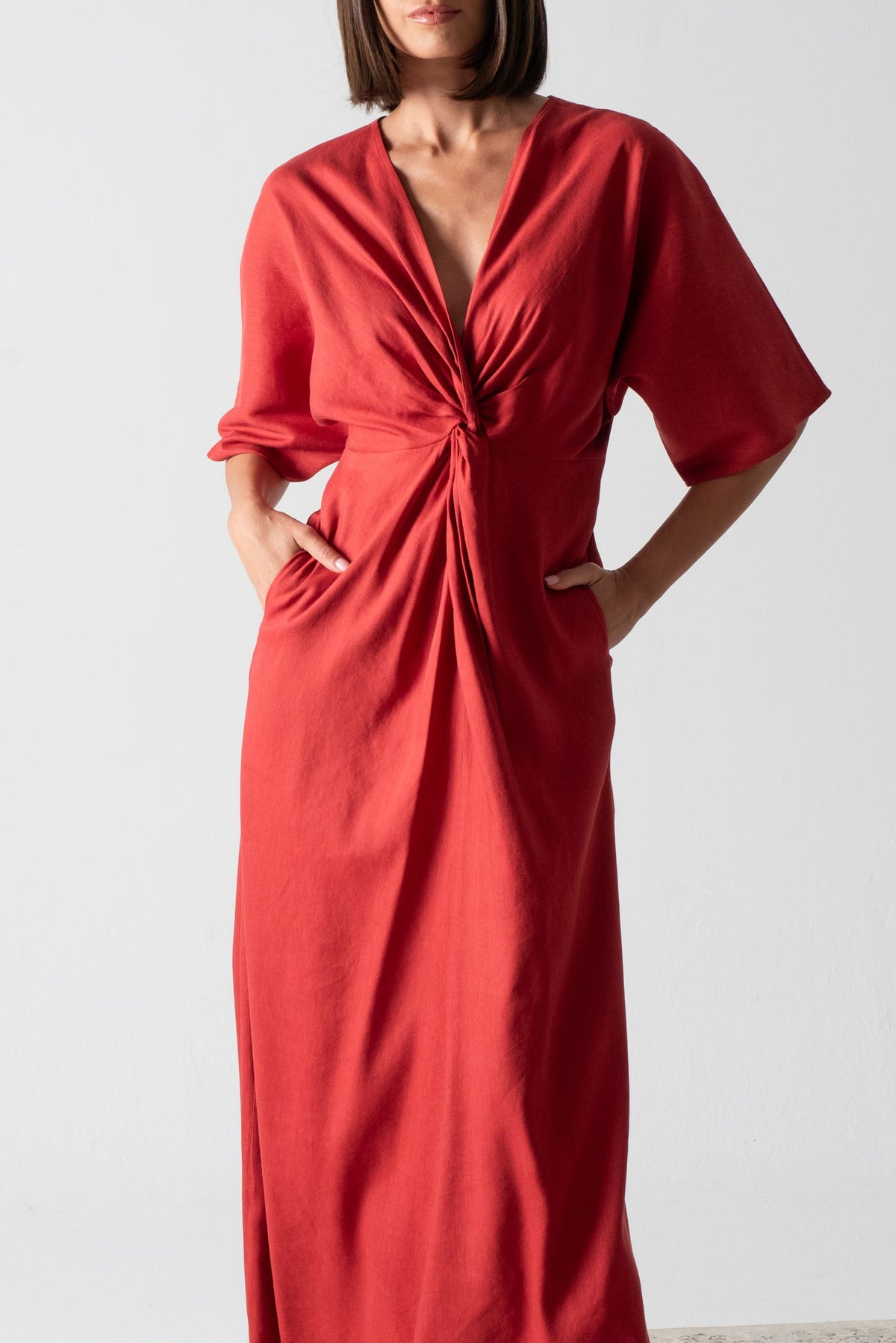
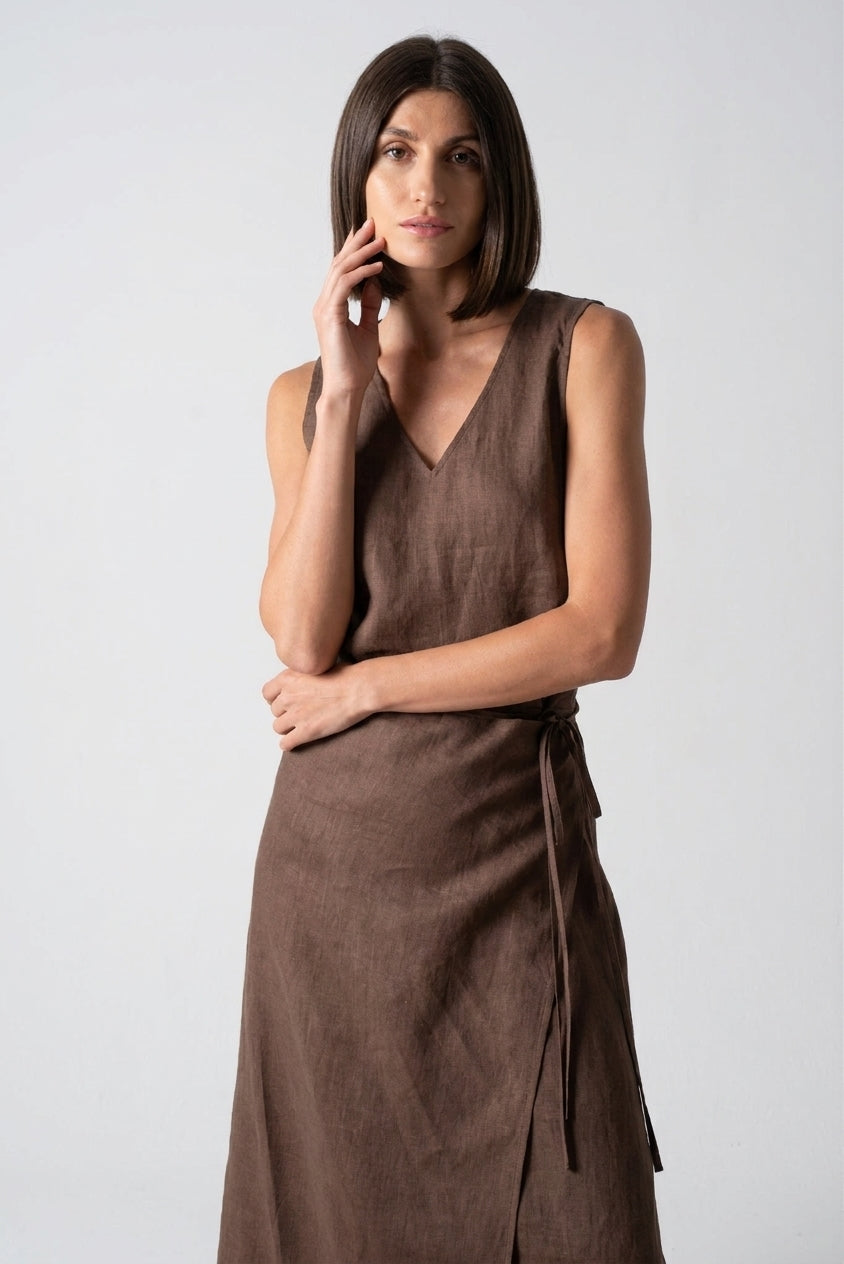
A breezy white midi dress is the perfect example: a pale colour and an easy, relaxed shape in pure linen, which ticks the two boxes the research cares about most. You'll find the same thinking across all our linen dresses.

Is Linen Good for Hot Weather?
Linen and hot weather are a perfect match. They go together as naturally as you, first-class and a glass of chilled champagne.
Like an Olympic swimmer, a linen slip dress breathes with effortless efficiency, keeping you cool, calm, and eternally sophisticated.
What about humid weather?
Humidity is where every fabric gets humbled. Dry heat is easy, because sweat evaporates quickly. When the air is already heavy with moisture, sweat struggles to leave your skin no matter what you're wearing.
Linen helps by pulling sweat off your skin and spreading it thin across the fabric, rather than leaving it to pool on the surface. You'll still feel the humidity (sadly, nothing fixes that), but you're less likely to feel wrapped in it.
One honest caveat: on very sticky days, linen can show the odd damp patch. That's the fibre doing its job, pulling moisture away from you.
Wearing linen all summer? Our guide to is linen good for summer covers the cold-water trick for smoothing out wrinkles, plus more ways to stay cool.
Try It at Home: The 30-Second Breathability Test
Textile labs measure breathability with very expensive machines. You can get a rough version at home with a garment, a window and about thirty seconds.
- The light test. Hold a single layer of fabric up to a window. The more light that filters through the weave, the more open it is and the more air it can let through.
- The breath test. Hold the fabric loosely over your mouth, put your other hand a few centimetres behind it and breathe out gently. If you feel your breath on your hand straight away, air is moving freely. If the fabric puffs up and pushes back, it's struggling. Yes, you'll look a little strange doing this. Worth it.
- The water test. Let a few drops of water fall onto the fabric. If they soak in and spread within seconds, the fabric will handle sweat well. If they bead on the surface, it won't.
- The tag test. Read the garment tag. Pure linen, or linen blended with other plant fibres, gives you the full effect. If synthetics are high on the list, expect less moisture handling, even if the fabric looks airy.
It's not lab-grade, but it's surprisingly good for comparing two garments side by side.
We'd suggest trying it at home rather than in a shop change room. Trust us on that one.
Frequently Asked Questions
Does linen make you sweat?
No. Linen doesn't cause sweat, it helps you manage it. Because it absorbs moisture instantly and spreads it out to evaporate, most people feel drier in linen on a hot day.
Does linen dry quickly?
Lightweight linen does. Research on drying times shows the biggest factor is how much water a fabric holds, which comes down mostly to its thickness and weave rather than the fibre.
A light linen shirt dries fast. A heavy linen tablecloth, less so. Short on time? Here's how to put linen in the dryer without any surprises.
Is linen breathable for sleeping?
Very. The same qualities that keep you cool during the day make linen a favourite for hot sleepers, whether it's sheets or a loose pair of linen pyjamas.
Is linen warm enough for cooler weather?
Surprisingly, yes. In the same lab study, linen ranked second for insulation and scored the best overall comfort balance between warmth and breathability. Heavier linen layered over a fine knit works well. Here's how to wear linen in winter.
Is linen see-through?
Lightweight linen in pale colours can be slightly sheer in bright light, while heavier weights and darker shades are more opaque. Our guide on what to wear under linen clothes covers the rest.

Conclusion: So, Is Linen Breathable?
Our second opinion is in: linen is breathable right down to the fibre. It lets air through, pulls sweat away from your skin and spreads it thin so it can evaporate.
It creases, yes. But we'll take a few wrinkles over a damp back any day.
- Choose 100% linen for maximum breathability, like our linen clothing collection.
- Go light and relaxed on the hottest days with loose linen dresses and wide-leg linen pants.
- Pick pale colours for full sun, such as a white linen dress, and give them room to move.
- Keep it soft and airy with gentle care, starting with our guide on how to soften linen.
- Make peace with the creases (or don't) with our honest take on does linen wrinkle.
Everyone's dipping their toes in the wellness pool at the moment, and linen has been there all along. Find out the health benefits of linen clothing by reading our blog. Some of them may surprise you!
Our Sources
- Cetelor, University of Lorraine (2014). European Linen: A Comfort Study on Textile Performance. Commissioned by the European Confederation of Flax and Hemp (CELC).
- Shkolnik, A. et al. (1980). Why do Bedouins wear black robes in hot deserts? Nature, 283, 373-375.
- Bioresources and Bioprocessing (2020). Fibre attributes of cotton, hemp, flax and canola. Moisture regain and fibre strength data.
- Bilen, U. (2021). The Effect of Linen and Linen Blends on the Comfort Properties of Bedding Fabrics. Journal of Natural Fibers.
- Defence Technical Information Center. The Effect of Fibre and Fabric Properties on Fabric Drying Times.