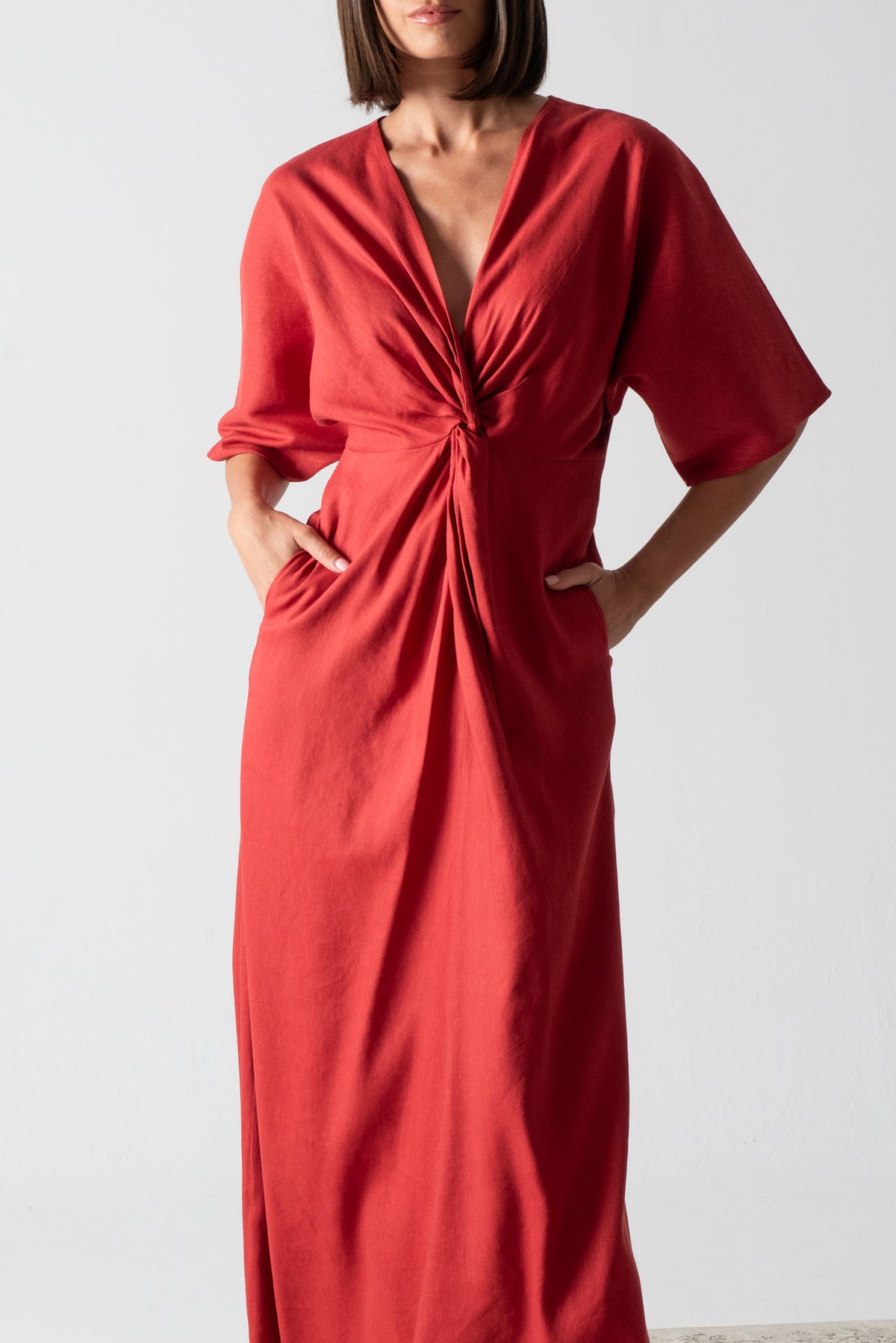
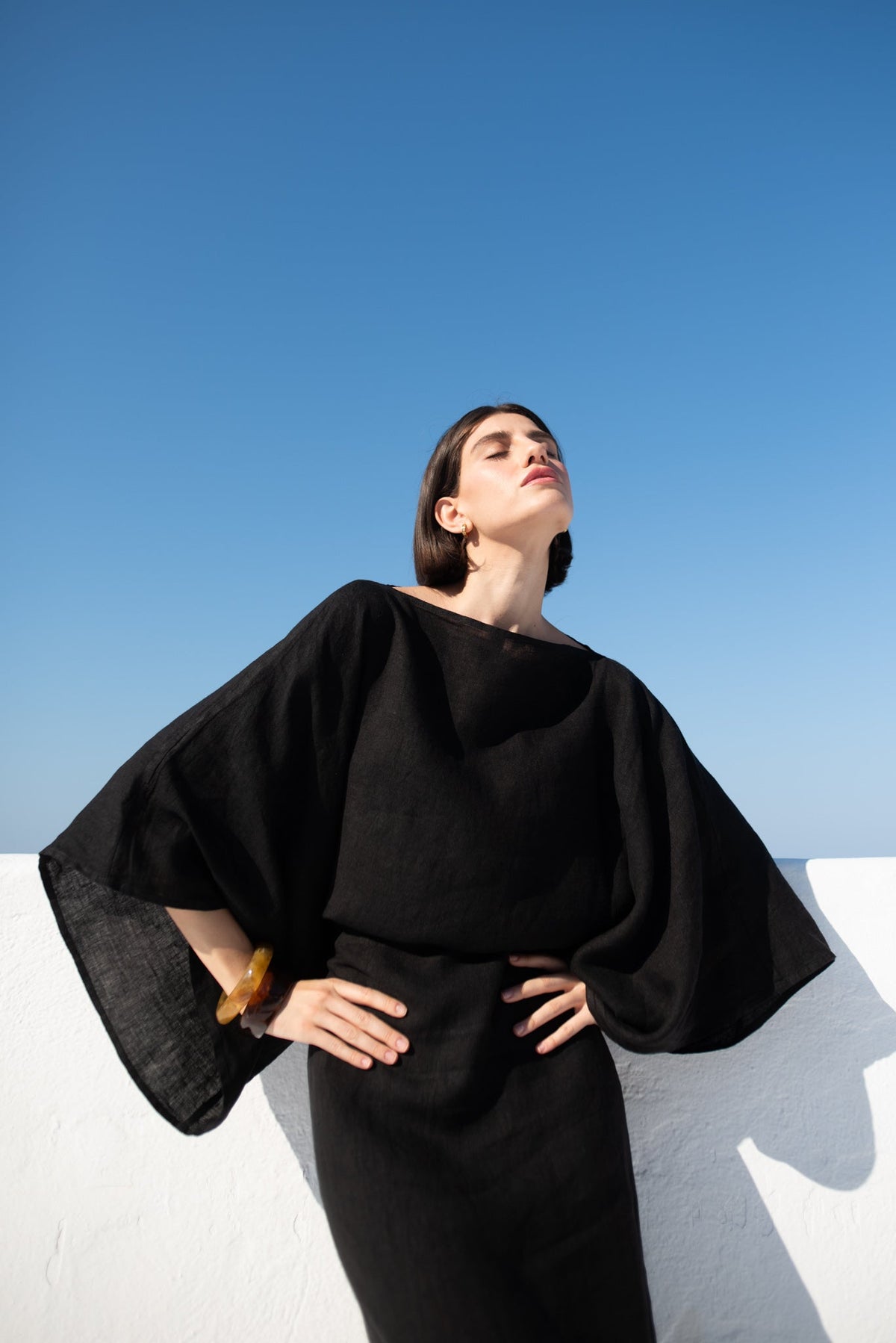
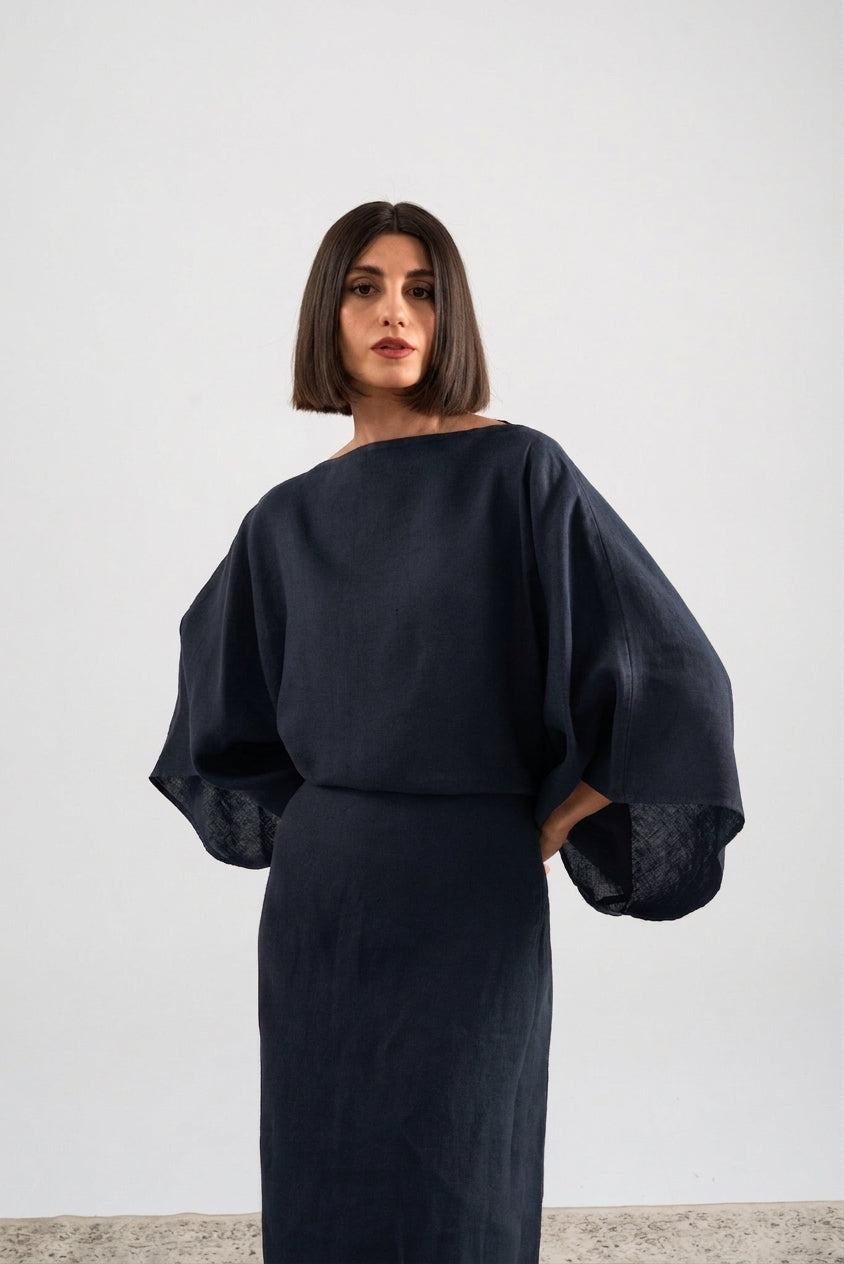
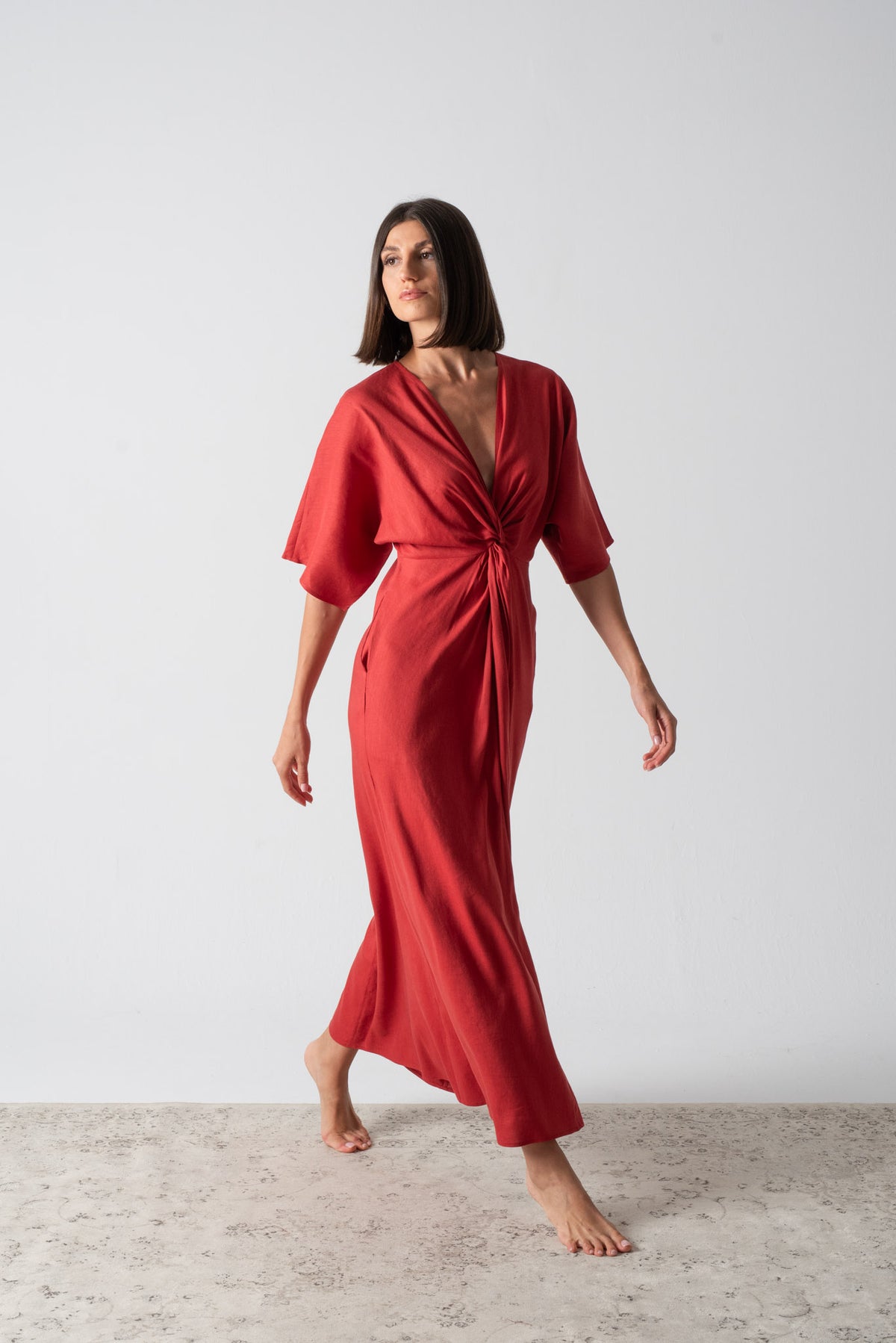
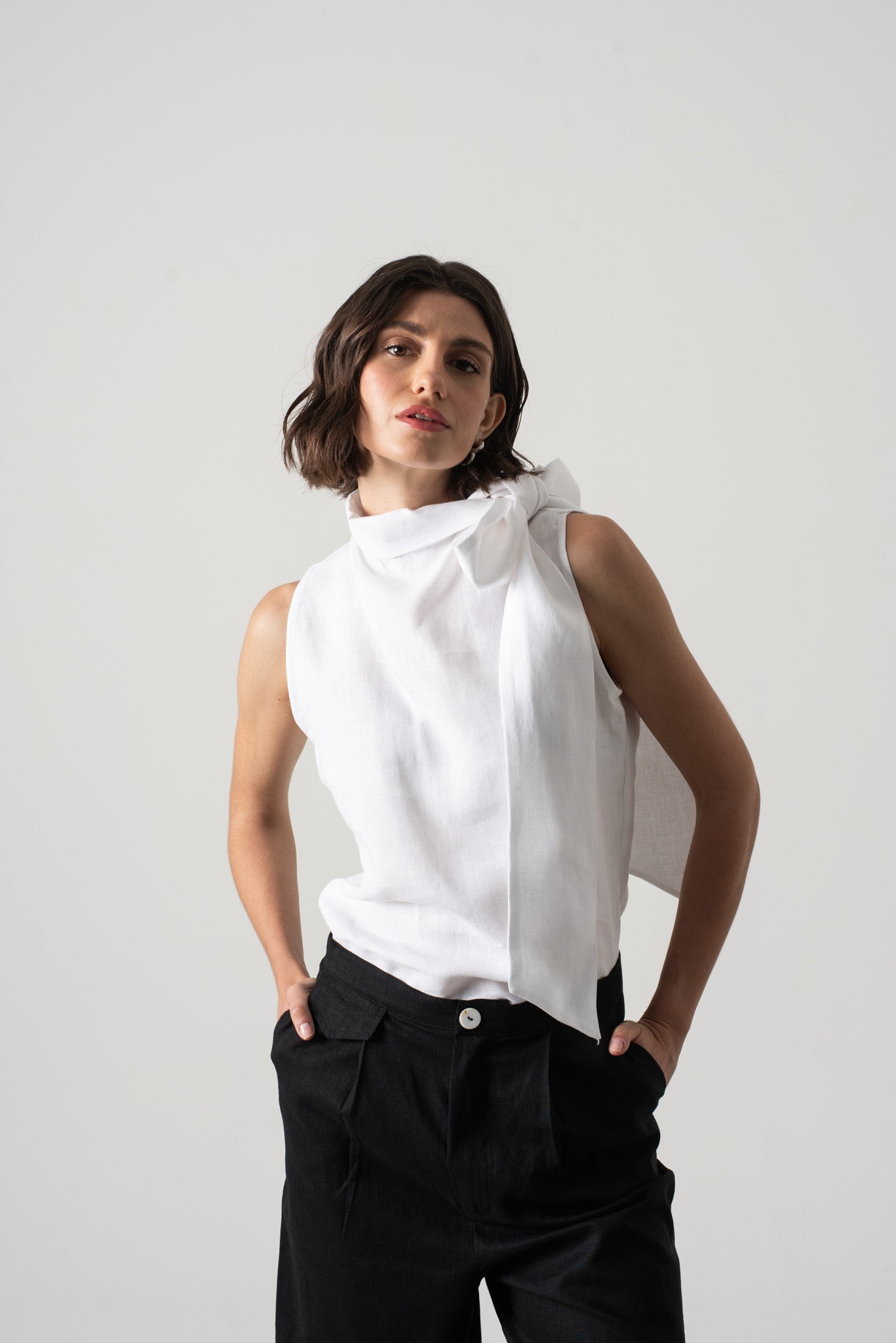
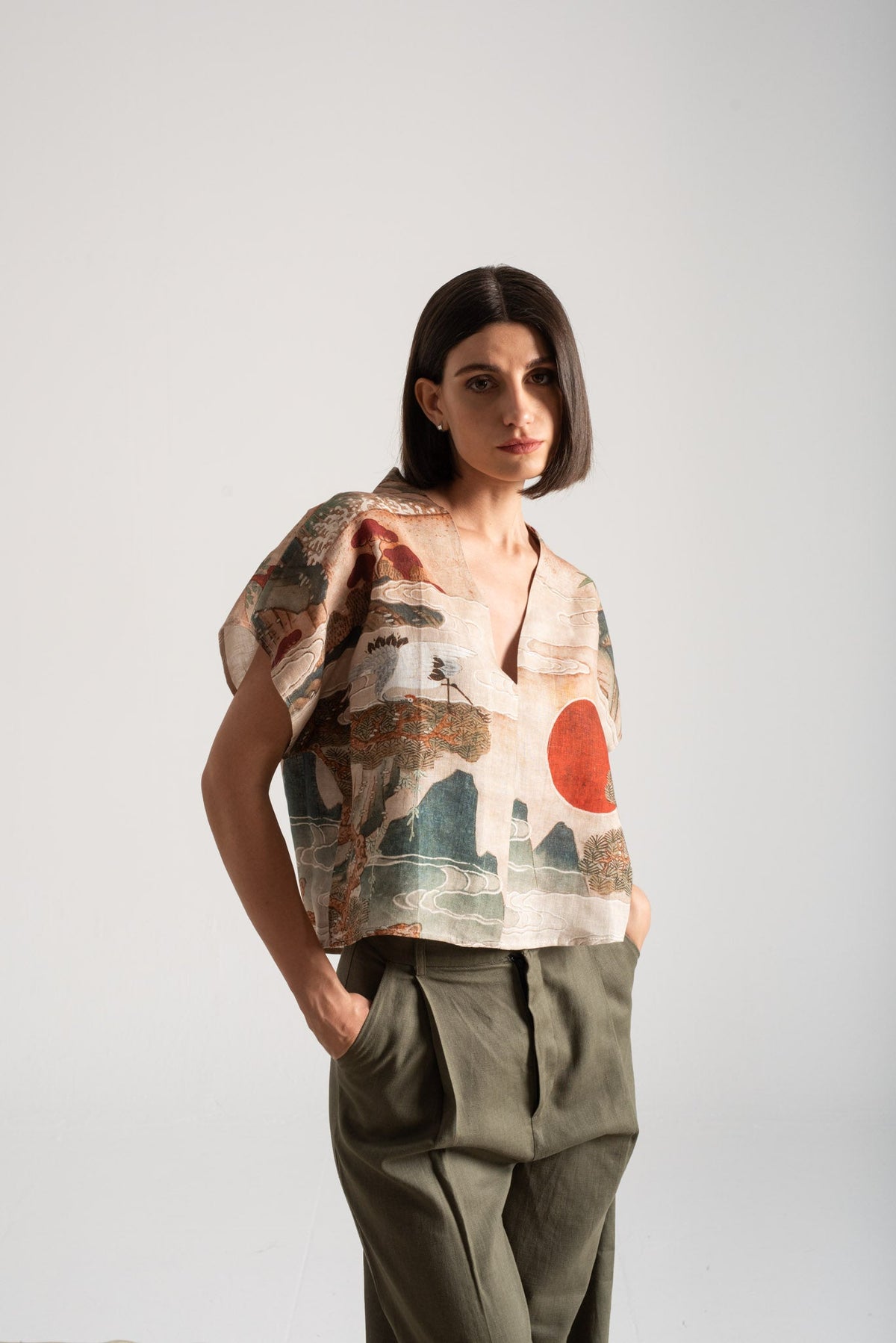


Linen is a natural fabric woven from the fibres of the flax plant, Linum usitatissimum. It's one of the oldest textiles in the world, valued for being strong, highly breathable and naturally temperature-regulating. Linen softens with every wash and can last for decades, which is why it's considered an investment fabric.
Linen, in short:
- Made from: flax plant fibres
- Known for: breathability, strength, temperature regulation
- Feels like: crisp when new, softer with every wash
- Lasts: decades with the right care
- Best for: hot weather, everyday wear, investment pieces
That's linen in a nutshell. But it's only the world's oldest natural fabric with ties to Cleopatra and Julius Caesar, so it deserves a bit more than a nutshell. It's incredibly resilient, moisture-wicking and antimicrobial as well as being quietly elegant. Polyester could never.
We'll take you through all the need-to-know details about this textile, from the plant it's made of to all the different things flax crops can be used for, the different types of linen you'll come across, and even its rather surprising cameo in the Bible. Not all linen is made equally, though, and we'll share why European linen continues to be the most sought-after variety in the whole world.
Wearing linen clothing is blissful, just like how you feel once you've finally booked that all-inclusive holiday you've been waiting for all year. Now you can also discover its story.

What Is Linen Made Of?
Almost without flaws, linen was made for the perfectionists, who can finally take a breath (for just a moment) because excellence has been achieved. It's an opulent textile that's breathable, antibacterial and thermo-regulating, and all these incredible characteristics come naturally—linen's born with them.
Created from the stems of the flax plant (or Linum usitatissimum for all the Latin scholars), linen is one of the world's oldest natural textiles and has been cultivated for more than 30,000 years. Those Vitamin C serums must really work because she doesn't look a day over 20,000.
How does the flax plant (a crop that looks like a beautifully gangly wildflower) transform into a textile? With numerous steps and expert knowledge. It takes work to create a masterpiece, and our 10-step skincare routine can relate. Here's a simplified version of the journey from plant to textile.
- First, the flax plant is harvested (roots and all)
- Then the woody stems are separated from the flax plant by a traditional process called "retting". But don't worry, the rest of the plant doesn't go to waste and is also used for other purposes.
- The stems are dried, cleaned and then combed.
- The fibres are then spun and woven into fabric by talented artisans before they're turned into linen pants.
Rapid-fire facts about the linen crop
(because it's cool to know stuff)
- Flax is planted in early Spring
- The crop takes about 100 days to grow, and at its fullest height can be 1 metre tall
- Pretty light blue flowers begin to bloom on the plant
- When it's harvest time, the entire plant is pulled from the ground, including the roots, to guarantee long fibres which will be woven into wonderful fabric
Linen Fabric, Linen Cloth, Linen Material, Linen Clothing: Is There A Difference?
Not really—they're all names for the same thing, just depending on who's saying them and why. Linen fabric, linen cloth and linen material are used interchangeably to describe the woven textile itself, straight off the loom and before it's been cut and sewn into anything. Think tablecloths, bedsheets and yardage by the metre.
Linen clothing is where that same fabric graduates into something you can actually wear—your linen dresses, shirts and trousers. So while "fabric," "cloth" and "material" all point to the textile in its raw form, "clothing" is simply the finished product made from it. Same fibre, same plant, different stage of the journey.
What Are The Three Types Of Linen?
Linen isn't a single, uniform cloth—it's usually grouped into three types, based on how tightly and in what pattern it's woven.
- Plain-weave linen: the classic, everyday weave, made by crossing the fibres in a simple over-under pattern. This is the most common type and the one you'll find in most linen clothing, from breezy shirts to linen midi dresses.
- Loosely-woven linen (or basket weave): woven with more space between the fibres, which makes it softer, more open and highly absorbent. It's the go-to for tea towels, glass cloths and lightweight homewares.
- Damask linen: woven on a jacquard loom to create intricate, reversible patterns, similar to how damask silk is made. It's the most formal and labour-intensive of the three, traditionally reserved for tablecloths and napkins on special occasions.
Whichever type ends up in your wardrobe or on your table, it all starts the same way: with those long, prized flax fibres we mentioned above. Want the full, unabridged version of that journey? We've gone deep on it in our blog on what is flax linen, where we cover each stage of the production process.

Why European Linen Feels (and Looks) Better Than the Rest?
Linen thrives in the south of France, just like we know we would. Picture on one side there's sea, in the middle cliffy coastlines and on the other side vivid green fields of flax, swaying in the breeze. Throw in a few stone farmhouses and you're right in the heart of the linen-growing region on our Pinterest board.
The most sought-after linen today comes from France, Belgium and the Netherlands. This area's humid climate, natural heavy rainfall and mineral-rich soil deliver the perfect conditions for growing flax, and help linen become the best version of itself. There's something about baguettes and quaint little villages that will do that.
You won't need to be an expert on linen trousers to be able to feel the difference. European flax fibres are actually much longer (90 cm) than those grown in other parts of the world, and this makes them sumptuously soft and fine.
Why is European linen softer?
The longer fibres are more easily separated from the plant than the shorter, coarser fibres, and so they don't have as many impurities, which can make the yarns rougher.
- Longer fibres: European flax is naturally longer (around 90cm), which makes the linen strong, smooth and durable.
- Only natural rainfall: The rainfall in Western Europe perfectly suits the flax crop, and means that no extra irrigation is required to grow linen.
- Zero-waste: All parts of the crop are used, from seeds to stems.
- Gentle on the environment: As we've already mentioned, linen really loves it in Western Europe and can be cultivated successfully with minimal artificial help. It's a crop that also helps boost soil quality.
- Traditional craftsmanship: European artisans have centuries of knowledge to draw upon and harvest and process the flax as close to the old ways as possible, ensuring quality.
- Strict laws: The European Union has stringent laws around flax production, which guarantee that the linen has been grown sustainably, ethically and with great care.
Is the price tag of premium linen really worth it? Discover all the amazing benefits of this timeless textile in our blog why is linen so expensive and decide for yourself. But when you start to think about how only the most important citizens of Ancient Egypt were allowed to wear it, we begin to understand how lucky we truly are.

What Is The Flax Linen Crop Used For?
A multi-tasking queen, linen can lend her talents to a variety of useful products, all while answering work emails and being the best dressed in the office. Some of them are obvious, like white linen pants, of course, but others are more unexpected. A surfboard made from linen? Would the real surfers think we're cool?
Linen fabric (long fibres):
- Clothing: A modern wardrobe isn't complete without at least a couple of standout linen tops, dresses and pants on wooden clothes hangers (where we hang only our most treasured pieces).
- Household linens: Once you actually start counting you'll find linen is quite literally everywhere in our homes from bedding, tablecloths and napkins to towels and curtains. If you ever doubt your interior design skills, you can always remind yourself that linen comes Marie Antoinette-approved.
- Innovative products: Longboards, the above-mentioned surfboards, skis and bicycle helmets can all be made from flax fibre composites thanks to plenty of research and innovation.
Linen (short fibres):
- Insulation materials: Not only does it keep our bodies warm, but its thermo-regulating properties are perfect for insulating our homes.
- Paper: Not just any paper, like everything linen does is high-end, textured and often used for wedding invitations. Either way, use it to write a letter and you'll feel like Jane Austen.
- Banknotes: As if we needed any more evidence of how valuable this textile is.
Linen seeds:
- Livestock feed: Flaxseeds are an incredible food source for livestock and agricultural animals. We love a crop that can give us both aesthetics and practicality.
- Cosmetics: High in lipids, you'll likely find flaxseed oil in many of the products on your bathroom counter.
Linen shives (the woody core of the flax plant):
- Mulch
- Animal bedding
- Fuel

Fun Facts about Linen Clothing in History
Even though we're completely obsessed with linen, we're definitely not the first ones. Instead, it's a fabric that has been treasured by the Ancient Egyptians and Romans, and since the Middle Ages, has been a prominent everyday item for both the wealthy and the more humble.
As if we need any more proof of linen's royal status. But what did Elizabeth II choose to wear to be crowned the Queen of England in 1953? She wore a white linen dress and gave a lesson on the elegance of simplicity. If it's good enough for the royals, guess it will do for us too.
When we talk about linen's durability, we're not exaggerating. If you need proof, just visit a museum and look at the Ancient Egyptian mummies, which are wrapped in linen bandages that are still in very good condition for their age (which can be around 6,000 years).
For those who love vintage pieces, you'll be interested to know that the world's oldest woven dress is, of course, crafted from linen and was excavated in Egypt. This heirloom is named the Tarakhan Dress and is more than 5,000 years old, and we suspect it has many more years to go.
The Biblical Meaning Of Linen
If that all sounds a little familiar from Sunday school, you're not imagining it. Linen shows up more than one hundred times across the Old and New Testaments, and it's almost never mentioned casually.
In the Old Testament, fine linen was the fabric of the priesthood—Exodus describes the priestly garments, the ephod and the curtains of the Tabernacle itself as being woven from it. Because it was so labour-intensive to produce, linen was associated with purity, holiness and status, reserved for the most sacred spaces and the most important people.
That symbolism carries through to the New Testament, where the Book of Revelation describes "fine linen, bright and clean" as standing in for righteous acts, and the Gospels describe Jesus's body being wrapped in a linen shroud after the crucifixion, echoing the same Ancient Egyptian burial customs we mentioned above. Thousands of years and several civilisations apart, linen kept turning up as the fabric for life's most important moments. We like to think that tradition is still true today, one linen piece at a time.

Linen vs Cotton: The Questions Everyone Asks
Is Linen 100% Cotton?
No. Linen and cotton aren't related at all—they come from two entirely different plants. Linen is made from the stem of the flax plant, while cotton comes from the fluffy fibres surrounding the seeds of the cotton plant. They're processed differently, feel different and behave differently in the wash, which is exactly why they get compared so often.
Is Linen Better Than Cotton?
It depends what you're optimising for. Linen is more breathable, more durable over time and gets softer (rather than pilling) with every wash, which is why we're a little biased towards it. Cotton tends to be softer straight off the shelf and is generally more affordable. Neither one is objectively "better"—it comes down to what you want from your wardrobe. We've gone deep on this exact question, fibre by fibre, in our Cotton vs Linen guide, if you want the full breakdown.
Conclusion: What Is Linen?
What is linen? The question we could also ask ourselves is what would life be like without linen? Probably dull, unglamorous and more sweaty. It's a textile with a rich history that spans civilisations across most areas of the world, and helps keep us warm in the winter and cool in the summer months.
- Linen is crafted from the flax plant, which grows particularly well in Western Europe. After a labour-intensive and time-consuming process, the stems of the flax plant are transformed into yarn, which artisans then weave and spin into a textile.
- European linen is usually longer. These longer strands are most prized by the fashion and homewares industries because they produce fabric that is finer, softer and stronger than the others, creating black linen pants that are irresistible.
- It's the oldest natural fabric. Scientists have recently discovered linen fabric in a cave in Georgia that is believed to be more than 30,000 years old.
- It comes in a few different weaves, from everyday plain-weave to loosely-woven homewares and formal damask, but it's entirely unrelated to cotton, despite the two constantly being compared.